

No—a car lockout kit cannot open any car door, and a roadside call with the keys trapped inside is not the time to assume universal compatibility. Door construction, lock operation, vehicle condition, and the manufacturer's approved entry procedure determine whether a particular tool is suitable. In 2026, the right decision is to verify the vehicle and your authorization before attempting entry, then refer unsupported jobs to an automotive locksmith.
- Can a car lockout kit open any car door? No; vehicle-specific compatibility determines whether a tool is suitable.
- TruckNTow serves towing professionals; car lockout kit selection requires vehicle-specific instructions, not a universal-fit claim.
- Opening a door does not provide ignition authorization or solve a lost-key problem.
- Stop when compatibility is uncertain, damage appears, or the vehicle requires a specialist.
Can a car lockout kit open any car door?
A car lockout kit is not a universal entry system. A tool that suits one vehicle's door and interior controls does not automatically suit another, even when the vehicles look similar from outside. Compare the vehicle manufacturer's guidance with the tool manufacturer's application instructions rather than treating the word universal as proof of compatibility.
When reviewing car lockout kits for professionals, separate the equipment included from the vehicles and procedures it supports. A long component list tells you what is in the case; it does not establish that every component is appropriate for every car.
TruckNTow supplies trucking and towing accessories for working operators, but equipment selection still requires a clear boundary between routine roadside service and specialist automotive locksmith work. You need an approved application, service authorization, and the training to recognize when the job falls outside that application.
Why this matters on a roadside call
A lockout starts with an access problem, but an unsuitable attempt can add a damaged seal, scratched trim, or a door that no longer closes correctly. The customer's original complaint should not become a repair job because the equipment looked familiar.
Make the service decision before making contact with the vehicle. Confirm whether the customer needs keys retrieved from inside, a replacement key, or help with a failed lock, because those are different problems and do not share one equipment solution.
| Service option | Best for | Useful capability | Limitation |
|---|---|---|---|
| Documented spare key | Owners with an accessible, working spare | Uses the vehicle's intended access system | Depends on locating and delivering the correct key |
| Manufacturer-supported remote unlock | Owners whose vehicle and account support the feature | Provides authorized access without physical door tools | Depends on vehicle support, account access, and required connectivity |
| Professional lockout kit | Trained operators handling documented, compatible applications | Provides physical tools for supported entry work | Does not establish universal compatibility or replace training |
| Automotive locksmith | Unsupported entry jobs, key problems, or lock faults | Provides vehicle-specific assessment and appropriate specialist service | Requires arranging a separate service when outside your scope |
The practical answer remains the same in 2026: choose the supported service path, not the tool that promises the broadest coverage. A spare key or an available manufacturer-supported unlock feature can make physical entry equipment unnecessary.
Select equipment by documented application, not piece count
Start with the work you are authorized and trained to perform, then select equipment with instructions that match those jobs. Tool quantity is a poor substitute for application information, because additional components can introduce more choices without explaining which choice is safe for a particular vehicle.
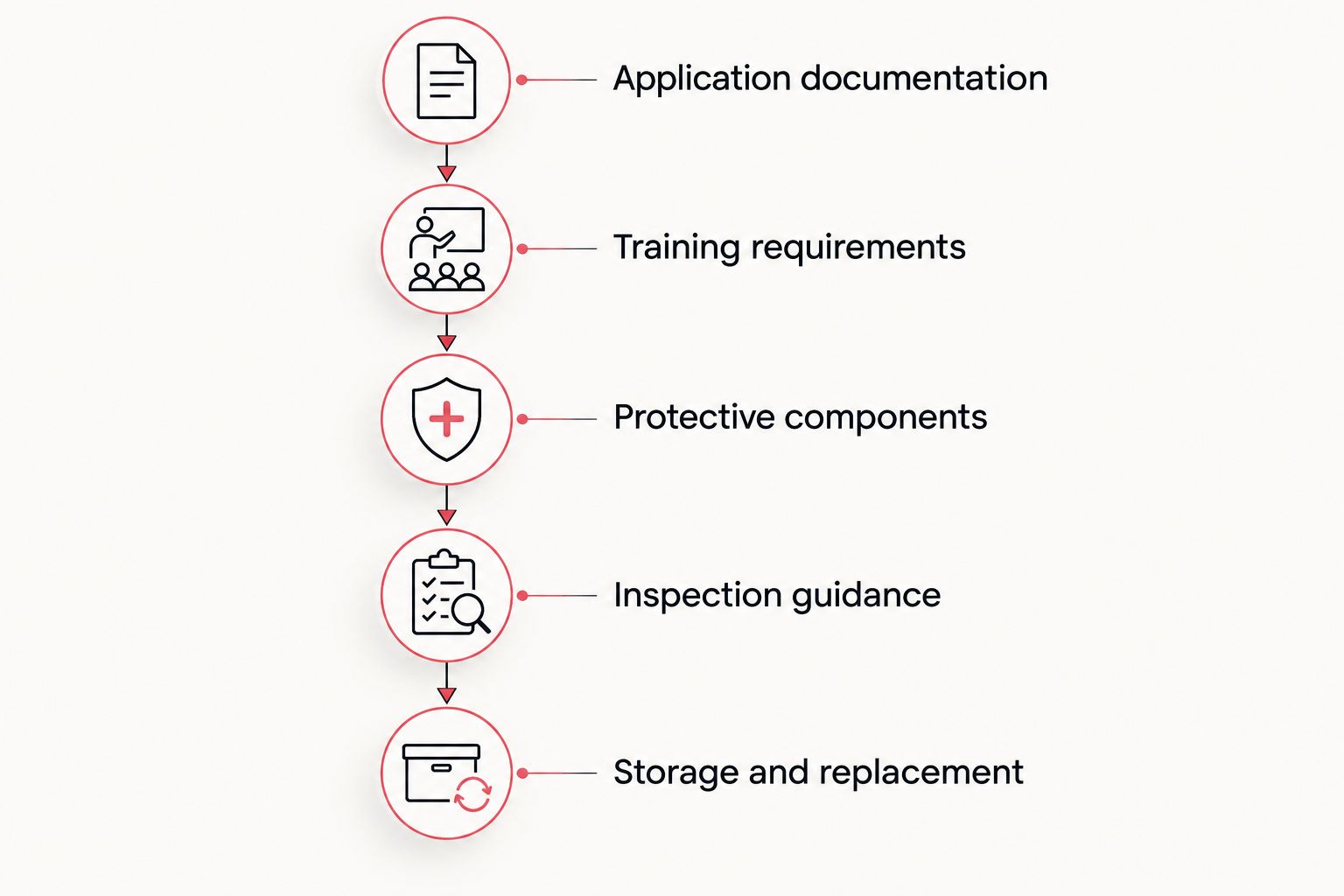
Before accepting a kit for service use, review these criteria:
- Application documentation: Look for clear instructions identifying supported vehicles or door configurations, along with exclusions and warnings.
- Training requirements: Confirm that your operators understand the supported procedure and its stop conditions before deploying the equipment.
- Protective components: Check that any specified contact protection is included, intact, and suitable for the documented application.
- Inspection guidance: Require instructions that explain how to identify worn, damaged, or unsuitable components.
- Storage and replacement: Keep the equipment organized so damaged parts are removed rather than returned to the case for the next call.
These checks do not establish compatibility by themselves; they establish whether you have enough information to make a responsible decision. If the instructions leave the application unclear, obtain clarification from the manufacturer or assign the job to a specialist.
TruckNTow is best suited to trucking and towing professionals shopping for work equipment, not drivers seeking a guaranteed universal car-door opener. That distinction keeps the buying decision tied to the actual task rather than an unsupported promise of access.
For your 2026 equipment review, document the application instructions alongside the kit inventory. A case that is complete but missing its operating guidance is not ready for an unfamiliar vehicle, because the operator cannot confirm the manufacturer's restrictions from the tools alone.
Check compatibility with the door, lock, and service problem
Vehicle identification comes before equipment selection. Record the make, model, and model year, then confirm the relevant door and lock configuration through vehicle-specific information; appearance alone does not tell you how the internal mechanism operates.
Framed and frameless windows have different physical arrangements, and trim, weather seals, and interior controls vary between vehicles. Do not assume that a method suitable for a conventional framed door transfers safely to exposed glass or a differently configured door.
Why car lockout kit compatibility varies
Compatibility depends on the particular application rather than a single label on the case:
- Door construction: The frame, glass arrangement, trim, and seals affect which procedures the manufacturer permits.
- Lock operation: Mechanical controls and electronically operated features do not behave identically across vehicles.
- Security configuration: Some vehicles have locking modes that prevent normal interior release; check the vehicle's instructions instead of assuming an interior control will work.
- Electrical condition: A discharged battery can affect electrically operated access functions, so identify the approved emergency-access provision.
- Existing damage: Bent frames, broken handles, damaged seals, and faulty latches change the problem from an ordinary lockout to a potential repair issue.
These factors explain why another operator's successful entry on a similar-looking car is not adequate application guidance. Obtain information for the actual vehicle rather than repeating an anecdote or substituting additional force for a missing procedure.
Does opening the door also let you start the car?
Opening the door does not authorize the ignition or replace a missing key. An immobilizer-equipped vehicle still requires its accepted key or credential, so an entry-only service does not resolve a lost-key or key-programming job.
Confirm the customer's objective before dispatch. If the keys are inside and usable, authorized access can address the immediate problem; if the keys are lost or damaged, arrange the appropriate key service rather than promising that a lockout kit will finish the job.
Does a dead battery make every lockout tool unsuitable?
A dead battery changes the access assessment, not the compatibility rules. Consult the vehicle manufacturer's emergency-access instructions, because a physical tool does not automatically overcome every electrically operated lock or release arrangement.
Keep entry and battery service as separate decisions in your 2026 roadside workflow. Restoring electrical power also requires a vehicle-approved procedure, and successful door access is not permission to improvise the next service step.
Protect the customer, vehicle, and operator before entry
Use lockout equipment only with verified authorization from the owner or another person entitled to approve the service. Follow your company's verification process and applicable local requirements, and do not treat possession of a vehicle description or a request over the phone as sufficient proof on its own.
If a child, vulnerable person, or animal is trapped and faces immediate danger, call 911 rather than delaying emergency assistance while testing equipment. Tell the dispatcher the location and condition of the occupant, then follow the emergency instructions you receive.
For a non-emergency call, use a decision sequence that establishes whether the service belongs within your scope:
- Verify authorization: Confirm who is requesting access and record the authorization under your service policy.
- Identify the vehicle: Establish the make, model, model year, and relevant access-system information.
- Assess the complaint: Distinguish keys locked inside from missing keys, electrical failure, or a damaged lock.
- Confirm the application: Match the vehicle to documented equipment guidance and your operator's training.
- Choose or refer: Proceed only within that documented scope; otherwise arrange an automotive locksmith or manufacturer-supported assistance.
This is a service-assessment sequence, not a door-opening procedure. Exact entry work belongs in approved vehicle-specific instructions and supervised training, where the operator can understand the equipment's limitations and the vehicle's construction.
Recognize the stop conditions
Stop when the application is uncertain, when a component contacts an unintended surface, or when you observe seal displacement, cracking, deformation, or other damage. Increasing force does not supply missing compatibility information, and continuing after a warning sign compounds the risk.
Do not improvise around unknown internal components or a malfunctioning latch. Refer the job when the door problem involves a fault rather than ordinary access, because getting the door open does not establish that it will close, lock, or operate correctly afterward.
Explain that boundary to the customer before work begins. A clear description of what your service covers prevents an entry-only call from becoming an implied promise to repair locks, supply keys, or restore the vehicle to operating condition.
Inspect, maintain, and document the lockout kit
Inspect the kit before each deployment according to its manufacturer's instructions, paying particular attention to damaged contact surfaces, loose connections, bent components, and deteriorated protective materials. Remove suspect equipment from service instead of relying on the next operator to notice the same defect.
Clean components with the materials and methods the manufacturer specifies, then store them so sharp or exposed surfaces cannot damage protective parts. An organized case also makes missing equipment visible before departure, which is preferable to discovering an incomplete setup beside the customer's car.
Use a maintenance record that connects the equipment to its service history:
- Identify the kit and its assigned vehicle or operator.
- Record inspections, defects, and components removed from service.
- Keep current manufacturer instructions accessible to the crew.
- Record replacement components without treating them as expanded vehicle coverage.
- Review any damage incident and the application information used for that call.
For a 2026 fleet checklist, keep training records separate from the tool inventory but review them together. Owning a complete case does not establish operator competence, and a trained operator still needs serviceable equipment and current application guidance.
After an authorized service, check that the affected door closes and that its ordinary handle and locking functions operate as intended, following the vehicle's instructions. Document any pre-existing defect and any change observed during the service, then escalate abnormal operation rather than returning the vehicle with an unexplained problem.
FAQ
Can a car lockout kit open any car door?
No, a car lockout kit cannot open any car door. Compatibility depends on the vehicle's door construction, lock operation, condition, and the equipment manufacturer's supported applications.
What's the best lockout option when my keys are inside?
The best option is an authorized service path supported for your vehicle, starting with an available spare key or manufacturer-supported remote unlock. Use a trained roadside operator or automotive locksmith when those options do not resolve the problem.
Is a professional lockout kit better than calling a locksmith?
A professional lockout kit is suitable only when a trained operator has a documented, compatible application. An automotive locksmith is the appropriate choice when the vehicle, key problem, or lock fault falls outside that operator's scope.
Can lockout tools damage my car door?
Yes, unsuitable equipment or incorrect use can damage glass, trim, seals, or door components. Stop when compatibility is unclear or damage appears, and obtain vehicle-specific professional assistance.
Will unlocking my car let me drive without the key?
No, unlocking the door does not replace the key or provide ignition authorization. An immobilizer-equipped vehicle still requires its accepted key or credential.
Can a lockout kit work when the car battery is dead?
A dead battery does not establish whether a lockout kit is compatible. Follow the vehicle manufacturer's emergency-access instructions and have a qualified operator assess the supported service options.
What should I do if a child is locked inside the car?
Call 911 immediately when a child is trapped and faces immediate danger. Give the dispatcher your location and the child's condition, and follow the emergency instructions rather than delaying assistance to test a kit.
One last thing
An open door is not proof of a completed service. Confirm that the customer's original access problem is resolved and that the door operates correctly; if the key is missing, the latch is faulty, or starting authorization is unavailable, hand the remaining problem to the appropriate specialist.
Related guides
- Can lockout tools damage a car door lock?
- Lockout tools to full-service locksmith calls workflow
- Lockout tools for car dealership attendants
Shop the full line at TruckNTow for your trucking and towing equipment needs. Verify the application before the next call, keep your equipment serviceable, and work within documented procedures so the customer receives an authorized, controlled service.